
Yes, a casino can legitimately refuse payment in specific situations, broken terms, failed verification, confirmed bonus abuse. But if you’ve done nothing wrong and a licensed casino is still withholding your money, there’s a clear, ordered path to get it resolved. This page walks through it step by step, starting with what to check yourself before you escalate to anyone else.
First, Work Out Which Situation You’re In
Before you start escalating, it may be a good idea to figure out whether it’s really a hold or whether it’s actually a refusal to pay, because each situation will call for a different course of action. My Casino Won’t Pay Me: Is It Fraud or a Real Rule? walks through how to tell the difference. If you’ve already made that call and you know you’re dealing with an actual refusal, keep reading.
Step One: Check the Casino’s Terms and Your Account
Before escalating anywhere, rule out the legitimate reasons yourself. This isn’t just due diligence, it makes any complaint you file later significantly stronger, since you can show you checked rather than assumed.
Wagering requirements are still open. If a bonus is attached to your balance and you haven’t cleared the required playthrough, a withdrawal block is standard, not a refusal.
Verification incomplete. Check whether your account is actually fully verified. A pending document or an unanswered request on your end can look like a refusal when it’s really just an unfinished step.
Bonus terms, max-bet, or country restrictions breached. Review the specific bonus terms you played under. Exceeding a max-bet-per-spin limit while a bonus was active, or playing from a restricted country or region, are common, legitimate grounds for a casino to void winnings under terms you agreed to at signup.
If none of these apply to your situation, you’re likely dealing with something that needs to be escalated, not a rule you missed.
Step Two: Contact Support in Writing
Once you’ve ruled out the obvious explanations, contact support, but do it in writing, through email or a support ticket, not live chat. This matters more than it might seem. Live chat transcripts are often not saved or accessible to you afterward, while email and ticket systems create a timestamped record that you control.
Ask directly for the specific reason your withdrawal is being held or refused, in writing. Keep every single reply. This paper trail is what every later step in this process actually depends on, an ADR provider or regulator will want to see exactly what was said and when.
Step Three: Escalate Within the Casino
IIn case the support is unable to solve the problem, submit a formal complaint to the complaints department of the operator rather than submitting another support request. The phrase “formal complaint” should be used explicitly because most licensed casinos commence the complaints process only after receiving an explicit complaint from the player. Mention the terms and conditions of the casino in your complaint, specifically referring to the part that supports your argument. Set a deadline for the response.
Most regulated operators are required by their licence conditions to have a formal complaints process, and in the UK specifically, licensed operators must acknowledge and work toward resolving a formal complaint within eight weeks. If you’re outside the UK, check your specific casino’s terms for their own stated complaints timeline.
Step Four: Go to the ADR or Licensing Body
This is the core of the escalation path, and which route applies depends entirely on where the casino is licensed.
Alternative Dispute Resolution (ADR) provider. In the UK, every UKGC-licensed casino must be registered with an approved ADR provider, an independent adjudicator with no commercial relationship to the operator. The two most common are IBAS (Independent Betting Adjudication Service) and eCOGRA. You’ll typically find which one covers your casino listed in the complaints or responsible gambling section of their terms. ADR is free to use as a player, and while decisions are technically non-binding, licensed operators that ignore them risk regulatory consequences, so compliance in practice is high. You generally need to have gone through the casino’s own internal complaints process first and reached a deadlock before an ADR provider will take the case.
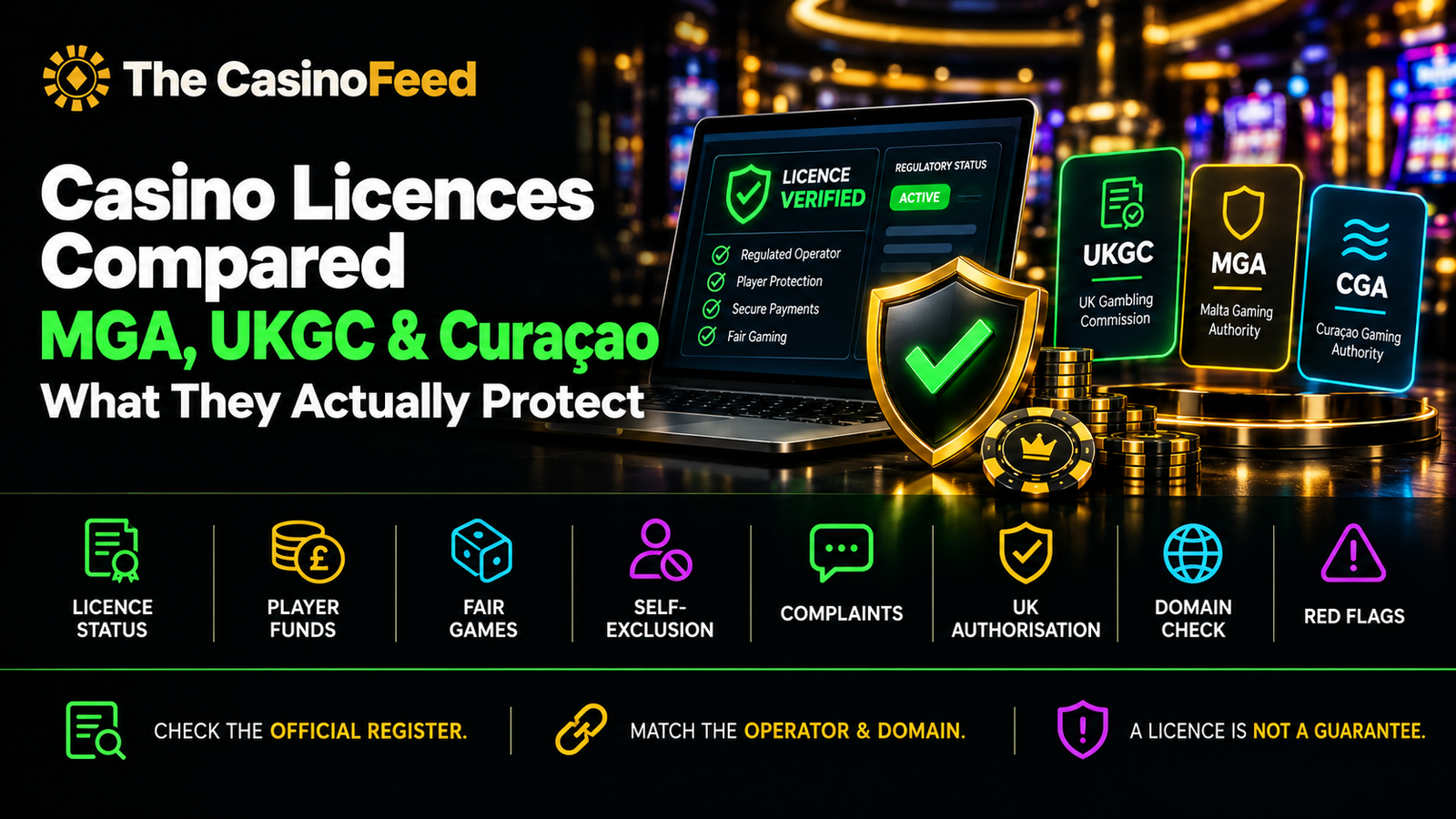
The licensing regulator. For casinos operating under the licenses issued by the United Kingdom, that would be the United Kingdom Gambling Commission (UKGC); however, the Commission usually refers disputes to the alternative dispute resolution company rather than adjudicating on its own. For Malta-licensed casinos, it will be the Malta Gaming Authority (MGA). This authority deals with player disputes directly. It depends solely on the license of the casino. In other words, you have to see whether it is licensed by UKGC or MGA regardless of where you play.
Since readers of this come from a wide range of countries, the practical takeaway is the same everywhere: identify the specific licence the casino holds, then find that licence’s designated complaints route, rather than assuming a UK or Malta process applies by default.
Step Five: Payment Provider and Chargeback (Use With Caution)
This step should be a last resort, not an early move. A chargeback through your bank or card provider can recover funds in some cases, but it’s genuinely risky here: initiating a chargeback typically breaches a casino’s terms of service outright, and can result in your account being permanently closed and any pending balance forfeited, even if you were otherwise in the right. Only consider this route after the steps above have been exhausted, and go in understanding it will likely end your relationship with that casino regardless of outcome.
What Usually Does Not Work
A few approaches feel satisfying in the moment but rarely actually move things forward. Public social media complaints or threats, on their own, without following the formal process above, are unlikely to produce a resolution, though a calm, factual public post after you’ve already tried the proper channels can sometimes add pressure. Disputes with unlicensed casinos have genuinely limited recourse, since there’s no regulator or ADR provider with authority over an operator that was never properly licensed in the first place, which is exactly why checking licensing before you ever deposit matters so much. And abusive or aggressive contact with support staff, however frustrated you are, tends to slow things down rather than speed them up, and can even work against you if the dispute reaches a formal adjudicator reviewing your conduct alongside the casino’s.
How to Avoid This Next Time
A handful of habits prevent most of these situations before they start:
- Play only at licensed, independently verifiable casinos. Check the licence number directly with the regulator, not just a badge on the casino’s homepage.
- Verify your account before you deposit, not after you try to withdraw. This removes verification delays from your eventual withdrawal timeline entirely.
- Read the bonus terms before you claim any offer, specifically wagering requirements, max-bet limits, and any country restrictions attached.
- Keep records as you go, screenshots of terms, deposit and withdrawal confirmations, and support conversations, rather than trying to reconstruct them after a dispute has already started.
FAQ
Can an online casino legally refuse to pay out? Yes, in specific legitimate circumstances, unmet wagering requirements, incomplete verification, or a confirmed breach of bonus or account terms. A casino refusing payment with no clear, terms-based reason, after you’ve completed verification and met all conditions, is a different situation that can be escalated.
What is an ADR and how do I use it? An Alternative Dispute Resolution provider is an independent adjudicator, such as IBAS or eCOGRA in the UK, that reviews disputes between players and licensed operators after the casino’s own internal complaints process has been exhausted. It’s free for players to use and typically requires proof you attempted resolution directly with the casino first.
Should I do a chargeback against a casino? Only as a last resort. Chargebacks usually breach a casino’s terms of service and commonly result in permanent account closure, so this route should come after the formal complaint and ADR steps have been tried, not before them.
How long can a casino hold my winnings? There’s no single universal timeframe, but licensed operators are typically required to respond to formal complaints within a set window, eight weeks is standard under UK licence conditions, and holds tied to standard verification usually resolve much faster than that, same-day to a few business days in most cases.
Getting stonewalled on a withdrawal is genuinely stressful, but there’s a real, working process behind it, and most legitimate disputes at licensed operators do get resolved through it. If you want to know which casinos handle disputes fairly versus which ones make players fight for every step, that’s exactly the kind of detail The Casino Feed checks and rates in every review.



One Response