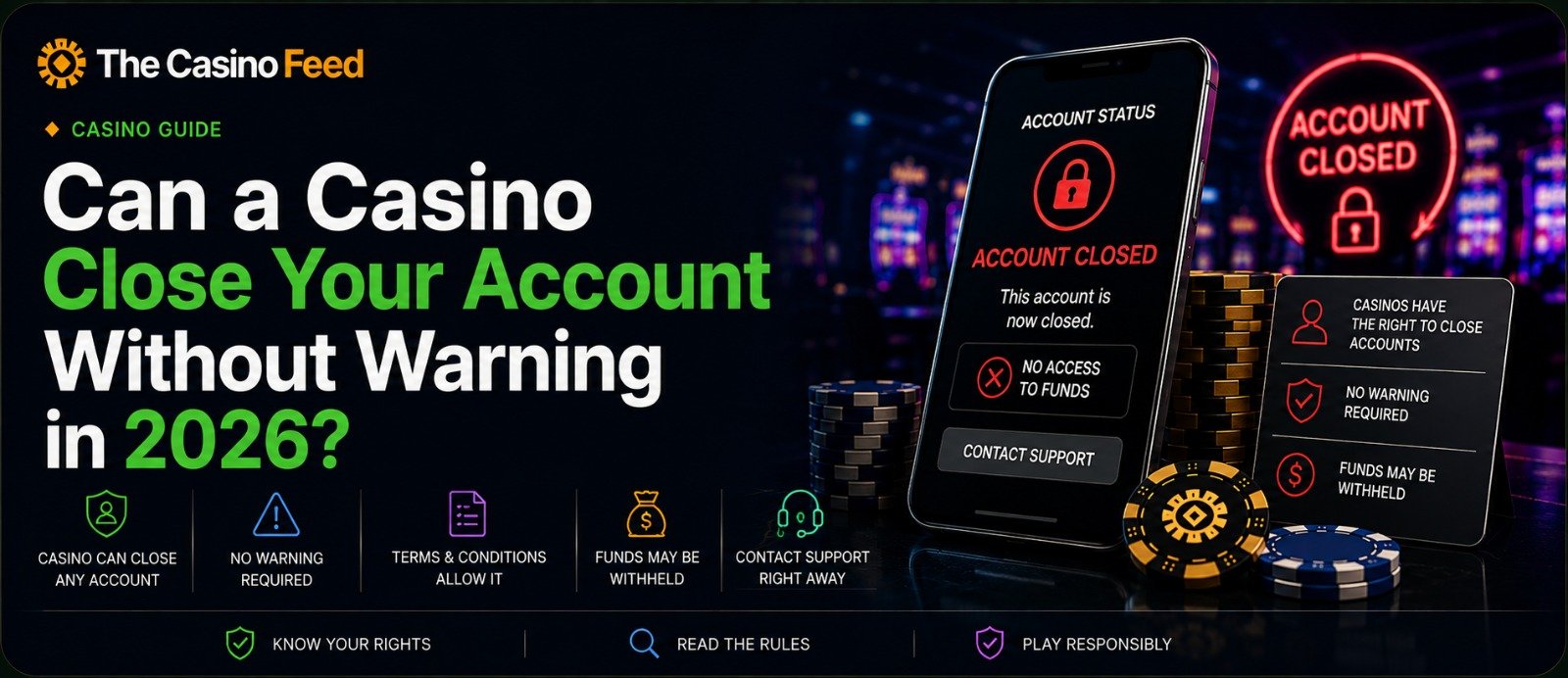
Yes, in specific circumstances, but not always without any obligation. Almost every casino’s terms and conditions reserve the right to close your account, and for suspected fraud, breach of terms, or prohibited activity, that closure can happen immediately with no advance notice at all. For a no-fault closure, where the casino just decides to end the relationship without accusing you of anything, many operators actually commit contractually to a notice period, commonly around 14 days, which means a true zero-warning closure with no cause given may itself breach the casino’s own terms.
What the Terms and Conditions Actually Say
This is the section most players never read until it suddenly matters. Casino terms typically reserve broad discretionary power, phrases like “we reserve the sole right,” “at our absolute discretion,” or “as we deem fit” appear constantly in this section, and they’re doing real legal work, giving the operator wide latitude to act without needing to justify every decision in detail.
But that discretion usually splits into two distinct tracks, and the difference matters a lot. Many standard casino terms include something like: the operator can close an account at any time for any reason by giving a set period of written notice, commonly 14 days, except where they discover or suspect a prohibited practice, in which case a different, faster process applies with no such notice requirement. In other words, the “no warning” scenario isn’t actually the default. It’s specifically carved out for cases where the casino believes something has gone wrong, not for closures made on a whim.
When Immediate, No-Notice Closure Is Standard Practice
A defined set of situations consistently justify immediate account action without advance warning, and this is where casinos genuinely don’t owe you a heads-up: breach of the account terms, suspected fraud, suspected illegal activity, account abuse or hacking, suspected collusion or match-fixing, multiple accounts, bonus abuse, or closure requested directly by a regulatory authority. In these cases, the casino will typically also retain any funds tied to the violation, particularly bonus-related winnings, though this is narrower than it might sound, see the funds question below.
What Happens to Your Money
This is the part most players actually care about, and there’s genuine regulatory protection worth knowing about here. Following the UK’s 2024 licensing reform, operators are required to pay out a player’s verified account balance when closing an account, with one significant exception: confirmed fraud. Your own deposited funds are almost always returned to you, since that money is legally yours, not the casino’s, regardless of why the relationship is ending. What can legitimately be forfeited in a genuine breach case is typically limited to bonus funds and any winnings generated through the bonus, not your verified real-money balance built from your own deposits.
It is important to understand the difference if you’re ever facing a closure: “my account was closed” and “my balance was legitimately forfeited” are two completely different issues. The second one requires the casino to point to a specific, genuine violation, not just cite closure as justification for keeping your money.
Why This Might Feel Like “No Warning” Even When It Technically Wasn’t
A few patterns explain why a closure can feel abrupt even when the casino was technically within its contractual rights. Verification and fraud-related closures often happen the moment an automated system flags something, with no human giving you a heads-up before the account locks, even though the underlying terms clearly permitted this. AI-driven behavioral monitoring, now standard across most large operators, can also trigger immediate restrictions for responsible-gambling or fraud reasons without prior warning, since the entire premise of that monitoring is to intervene as soon as a risk pattern appears, not after a delay.
The emails about the closure can end up in the spam folder and go unnoticed, making a correctly notified closure seem similar to one that has no warning at all.
What to Do If Your Account Is Closed Without Explanation
Ask directly in writing what specific term or clause the closure is based on, and whether any notice requirement applied to your specific situation. If the operator cited a no-fault closure but didn’t provide the notice period stated in its own terms, that’s a legitimate point to raise directly. If your verified balance is being withheld and no fraud has actually been established, that’s worth escalating formally, since UK regulatory expectations are clear that a verified balance should be returned absent confirmed wrongdoing. For the fuller breakdown of the different reasons accounts get locked or closed and how to work through each, see Casino Locked or Closed My Account: What It Means and Your Options, and if the casino won’t resolve things directly, the full escalation path, formal complaint, then Alternative Dispute Resolution or the relevant regulator, is covered in What to Do If an Online Casino Refuses to Pay You.
An account closure feels sudden even when it technically wasn’t, which is exactly why understanding what your casino’s own terms actually promise matters before you’re the one dealing with it. If you want to know which casinos handle account closures fairly and transparently versus which ones hide behind vague discretionary language, that’s exactly the kind of detail The Casino Feed checks and rates in reviews.
FAQ
Can a casino legally close my account with zero notice?
For suspected fraud, breach of terms, or prohibited activity, yes, this is standard and contractually reserved. For a no-fault closure with no specific accusation, many operators’ own terms actually promise a notice period, commonly 14 days, so a genuinely unexplained, zero-warning closure may not match what the casino’s own contract says it will do.
Will I lose my money if my account is closed?
Usually not your own deposited funds. Following UK regulatory reform, verified balances must generally be returned to players even on closure, with confirmed fraud being the main exception. Bonus funds and bonus-generated winnings are more commonly forfeited in genuine breach cases.
Why did my account get closed with no warning even though the terms mention a notice period?
This generally implies that closure has been classified as a possible breach or fraudulent case and not a no-fault closure case which follows a separate process in most standard terms. It’s worth asking directly which category your closure falls under.
What should I do if a casino won’t explain why my account was closed?
Request the specific reason and relevant clause in writing. If the matter is not settled, escalate it through a complaint or, where applicable, an Alternative Dispute Resolution agency.