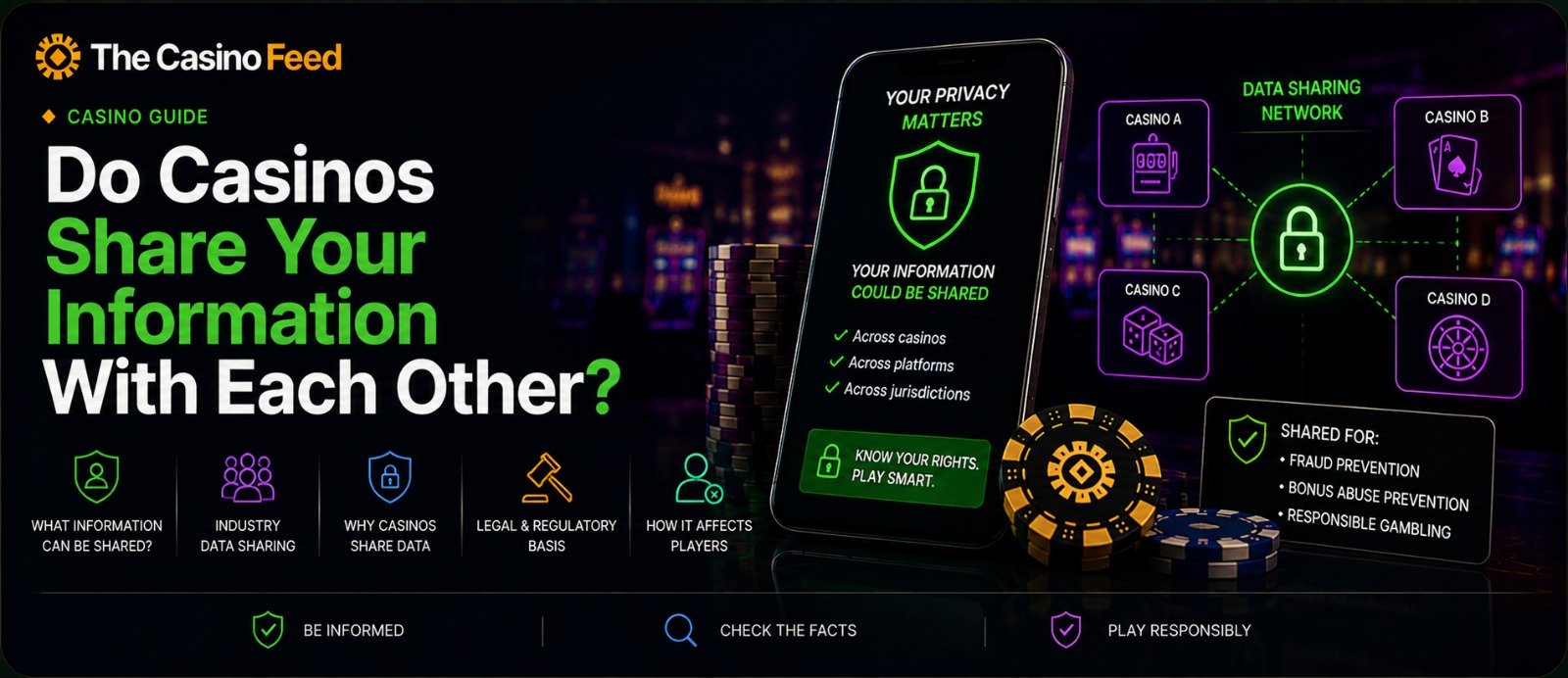
Not for general or marketing purposes, no. Casinos don’t pass your personal data to competing operators just to help each other target you with offers. What they do share is narrower and specific: self-exclusion status through schemes like GAMSTOP, fraud and identity data through shared industry databases, and account information across sibling brands owned by the same parent company. Each of these has a distinct legal basis, and they’re worth understanding separately rather than as one blanket “casinos share everything” assumption.
Self-Exclusion: The Biggest, Most Deliberate Sharing System
This is the clearest and most consequential example of cross-operator data sharing, and it’s built specifically to protect players, not to track them. In the UK, GAMSTOP links the vast majority of licensed gambling sites into a single self-exclusion system. When you register with GAMSTOP, your details are checked against participating operators’ systems at both account creation and login. If you try to sign up or log into a site while excluded, access is blocked, across every participating brand, not just the one you originally excluded from.
This only works because it’s a shared system by design. A self-exclusion registered at one casino wouldn’t protect you at all if that data stayed siloed inside a single operator’s database, since you could simply sign up somewhere else immediately. The entire point of sharing this specific category of data is to close that gap.
Fraud Prevention: A Real, Legally Justified Exception
Beyond self-exclusion, operators do participate in fraud and crime prevention data sharing, and this is explicitly one of the narrow, legally recognized exceptions to otherwise limiting data sharing between competing businesses. Shared industry fraud databases let operators flag known fraudsters, chargeback abusers, and identity fraud patterns, checking new signups against records contributed by other participating platforms. Sanctions and politically exposed persons (PEP) screening works similarly, checking new customers against international watchlists that exist independently of any single casino, standard infrastructure required by anti-money-laundering regulation rather than something specific to gambling.
Payment providers add another layer here, separate from the casinos themselves. Card networks and payment processors maintain their own fraud detection systems that can flag suspicious transaction patterns across multiple merchants, including but not limited to gambling sites, which is standard financial infrastructure rather than a gambling-specific practice.
Sibling Brands: When “Different Casinos” Are Actually the Same Company
This is the sharing category that surprises the most players, because it looks like separate competitors when it isn’t. Many large gambling companies operate multiple consumer-facing brands under one corporate umbrella, and within that structure, account data, including self-exclusion status and sometimes broader account and behavioral flags, is commonly shared across the network. If you’re flagged or excluded on one brand, connected sibling brands under the same parent company frequently see that same data, since from a corporate and regulatory standpoint, they’re effectively one operator wearing different names.
This matters practically: if you assume switching from one casino brand to a “different” one gives you a clean slate, check first whether they’re actually owned by the same parent company. If they are, whatever triggered a flag or restriction on one may already be visible on the other.
What Casinos Genuinely Don’t Share
It’s worth being direct about the boundary here too. Legitimate operators don’t hand your personal data to unrelated competing casinos so they can market to you directly, and privacy regulations like GDPR in the UK and EU place real legal limits on this kind of general commercial data sharing. Any sharing outside the specific categories above, fraud prevention, legal requirements, national schemes like GAMSTOP, is meant to be the exception, not the norm, and operators are required to complete risk assessments and maintain security safeguards around any data they do share.
That said, it’s genuinely difficult for players to verify this in practice. Privacy policies frequently reference sharing with “trusted partners” without naming them specifically, and payment processors, marketing platforms, game developers, and analytics firms all sit somewhere in a typical casino’s broader data ecosystem, even if they’re not other casinos directly. Reading a casino’s actual privacy policy, specifically the section on third-party data sharing, is the only reliable way to know what a given operator’s practices actually look like, since this varies meaningfully by operator and isn’t standardized the way self-exclusion sharing is.
Why This Matters for How You Play
A few practical takeaways follow from all this. If you’re self-excluding for genuine reasons, understand that a properly functioning multi-operator scheme like GAMSTOP is specifically designed to prevent you from simply signing up elsewhere, and that’s the system working as intended, not a privacy failure. If you’re dealing with an account flag or restriction, check whether the “different” casino you’re considering switching to is actually a separate company or a sibling brand under the same parent, since the flag may already be visible there.
And if data privacy specifically concerns you, read the actual privacy policy of any casino before signing up, rather than assuming all operators handle this identically, since practices genuinely differ.
Understanding what’s actually shared, and what isn’t, matters more than most players realize when deciding where and how to play. If you want clear, accurate coverage of how casinos actually handle player data and protection tools, that’s exactly what The Casino Feed checks and explains in every review.
FAQ
Do online casinos share my personal data with competitors?
Not for general or marketing purposes. Legitimate sharing is limited to specific legal bases like fraud prevention, national self-exclusion schemes, and regulatory requirements, not routine data exchange between unrelated competing operators.
How does GAMSTOP work across different casinos?
GAMSTOP links participating UK-licensed operators into a shared self-exclusion system. It checks your details against every participating site at account creation and login, so an exclusion registered once applies across the network rather than just the original site.
If I’m banned from one casino brand, will other brands know?
It depends on ownership. If the brands are owned by the same parent company, account and exclusion data is frequently shared across that network. If they’re genuinely separate, unrelated companies, a ban at one typically doesn’t carry over unless it involves a shared system like GAMSTOP or a fraud database.
Can I find out exactly what data a casino shares and with whom?
The casino’s own privacy policy is the most reliable source, specifically the section covering third-party data sharing, though these policies vary significantly in how specifically they name the partners involved.