
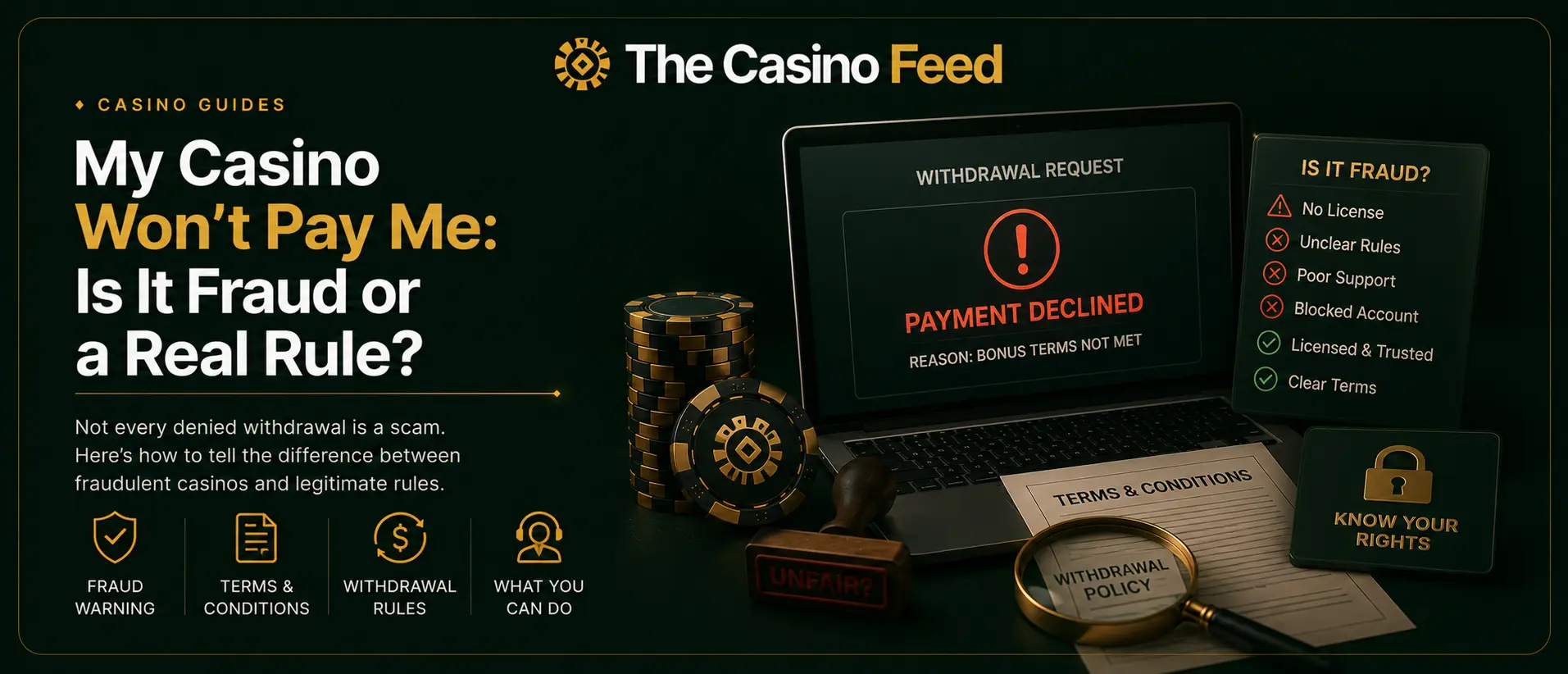
You won. The balance is sitting right there in your account, green and glowing, and then you hit withdraw, and nothing happens. Or worse, something happens: a message saying your withdrawal’s “under review,” or your account’s suddenly “flagged for verification,” or a bonus term you don’t remember agreeing to just wiped out half your balance.
Your first instinct is probably rage. Your second instinct is probably “this is a scam.” And honestly? Sometimes it is. But sometimes it really isn’t, and the two situations look almost identical from where you’re sitting.
Let’s actually sort this out, because knowing the difference changes what you should do next.
Why This Is Genuinely Hard to Tell Apart
Here’s the thing: casinos that are legitimately following the rules and casinos that are stalling you on purpose often use the same language. “Your withdrawal is under review.” “We need additional documentation.” “This is standard procedure.” A scam operator can type that sentence just as easily as a licensed one.
That’s what makes this so frustrating. You can’t just read the excuse and know whether it’s real. A friend of mine once waited nine days for a $400 withdrawal from a licensed, reasonably well-known casino, nine days of vague “still processing” replies that felt exactly like a stall. It wasn’t one. It turned out to be a backlog on their payment processor’s end. But he had every reason to be suspicious while it was happening, because the experience of waiting doesn’t tell you which situation you’re in.
What most people miss is that the emotional experience of being delayed is identical whether the delay is legitimate or not. That’s precisely why you can’t rely on gut feeling alone here. You need to actually check specifics.
The Legitimate Reasons Payouts Get Held Up
Let’s start with the boring, real explanations, because there are more of them than people expect.
Verification delays are probably the most common ones. If you haven’t completed KYC, identity documents, and proof of address before requesting a withdrawal, that process has to happen first, and it can take anywhere from a few hours to a few days, depending on how backed up the compliance team is. This isn’t a stall tactic; it’s a regulatory requirement most licensed operators are bound by.
Bonus wagering requirements are another huge source of confusion. If you claimed a deposit bonus, there’s almost always fine print requiring you to wager the bonus amount some multiple of times before you can withdraw anything tied to it. Say you grabbed a $50 bonus with a 35x wagering requirement; that means $1,750 in total bets before that bonus money, or winnings from it, become withdrawable. Miss that requirement, and the casino isn’t scamming you by refusing the withdrawal. You genuinely haven’t met the terms yet, even if you didn’t fully register that detail when you clicked “claim.”
Payment processing timelines matter too. Bank wires can legitimately take five to seven business days. Some e-wallets process same-day. If a casino quotes you “3-5 business days” and it’s day two, that’s not fraud, that’s just the timeline they told you upfront.
And then there’s the account review category: sudden pattern changes, like a huge bet size increase or a big win right after a bonus claim, can trigger a manual fraud review even on completely legitimate accounts. It’s annoying, but it’s the same kind of thing your bank does when you make an unusually large purchase in another country.
The Red Flags That Actually Signal Something’s Wrong
Now for the other side, because plenty of “review periods” really are just excuses to avoid paying out.
Watch for constantly shifting explanations. If a casino tells you it’s a verification issue, you send the documents, and then suddenly it’s a “technical issue with the payment provider,” and then it’s “management needs to approve large withdrawals,” and then it’s something else entirely, that’s not a process, that’s improvisation. Legitimate delays have a consistent reason and a rough timeline attached. Scam stalling invents a new obstacle every time you clear the last one.
Retroactive term changes are another huge red flag. Picture this: you win $2,000, and suddenly the casino points to a term buried in their conditions saying max cashout from free spins is capped at $100, a term you never saw highlighted anywhere during signup or gameplay. Some of this is legitimate (capped bonus winnings are common and disclosed if you look). But when the cap conveniently only gets mentioned after a big win, and support can’t produce where this was clearly communicated beforehand, that’s a serious warning sign.
Disappearing support is the most obvious one. Live chat that suddenly goes offline permanently. Emails that stop getting replies. A phone number that rings out. If a casino stops communicating entirely once a payout is requested, you’re not dealing with a compliance delay anymore; you’re dealing with an operator that’s checked out.
And here’s a big one: unlicensed or vaguely licensed operators. If you can’t find a real, verifiable license number, or the license is from a jurisdiction with essentially no enforcement mechanism, there’s no regulatory body forcing them to eventually pay you. That absence of accountability is often the real reason a “review” never ends.
How to Actually Check Which Situation You’re In
Now, how do you determine, at the time, which of the two groups you are in? Read the bonus terms and wagering requirements that you agreed to and read them, not skim them. A lot of “the casino won’t pay me” situations stem from a wagering criterion or a max cashout clause that the player didn’t realize when they took a particular bonus.
Then compare the given time frame with the actual time. While it may seem to be a red flag, if they quoted 3-5 business days and you are on day 3, it’s not quite a red flag yet. If they said 3-5 days and you’re on day twenty, and there’s no explanation, it’s a whole other ballgame.
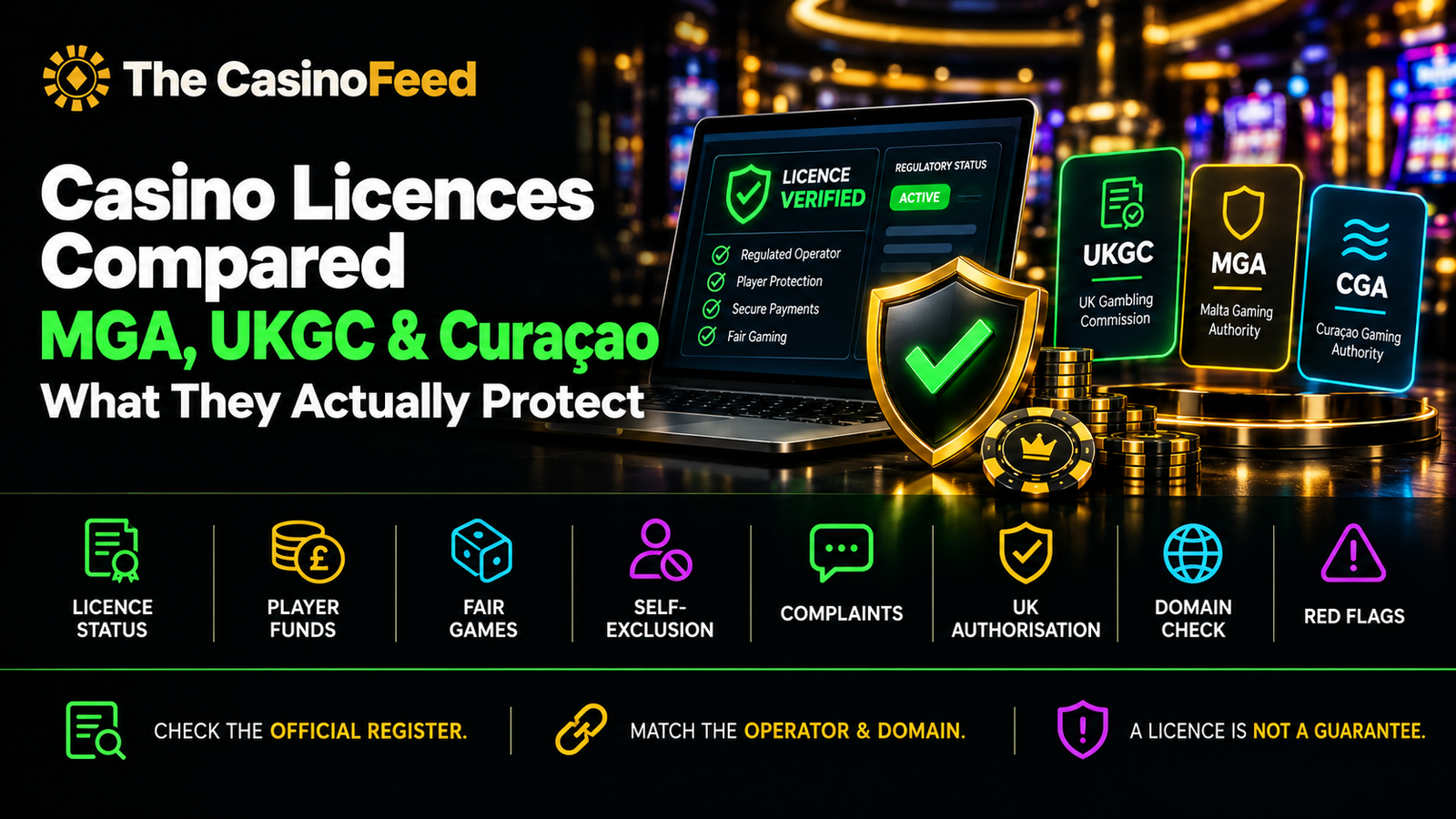
Next, check the license. On the MGA, UKGC, or Curaçao Gaming Authority websites, look up the casino’s license number directly on the public register. Do not rely solely on the “badge” at the bottom of the casino’s website; verify it on your own. Should the license not check out, or if it is not present, you are working with an operator that has no real accountability process in place, and it affects the way you should proceed.
Lastly, look at the exact problem you have and the name of the casino. A dozen other players are saying “under review forever,” the same pattern, same operator, you don’t have some fluke, you have a recognized pattern.
What to Actually Do Next
If it proves to be a real delay, it’s patience coupled with documentation. Maintain all e-mails, all chats, and all screenshots of claimed deadlines. When, if it ever does get delayed beyond the timeframe they quoted, you’ll want that paper trail.
If it is licensed and still not moving, contact the regulator directly if it is not moving. Both MGA and UKGC have player complaint channels, and operators listen to them, as their licenses are at stake. This action alone is able to solve a lot of apparently unsolvable quarrels between you and a customer support bot.
If it is not licensed or the license is fake or cannot be verified, then it is a loss you are attempting to reduce, not a lawsuit that you are going to win. Report it to the gambling watchdog websites and forums, so others do not fall into the same trap as you, and that won’t return your money, but it does something.
The Bottom Line
Not every payout delay is fraud, and not every “standard procedure” excuse is legitimate. The difference usually comes down to consistency: real rules stay the same every time you ask, while excuses shift the moment you satisfy the last one. Check the terms, verify the license, and track how the story changes over time.
If you’re in the middle of a stalled withdrawal right now, pull up your bonus terms and the casino’s license number today. That’s the fastest way to know exactly what you’re dealing with, and exactly what to do about it.



2 Responses