
Every casino site has that little strip of logos at the very bottom of the page, payment icons, an 18+ badge, and usually some kind of Casino license seal sitting quietly next to them. Most players glance at it for half a second and assume the presence of a logo means the site’s legit. Job done, right?
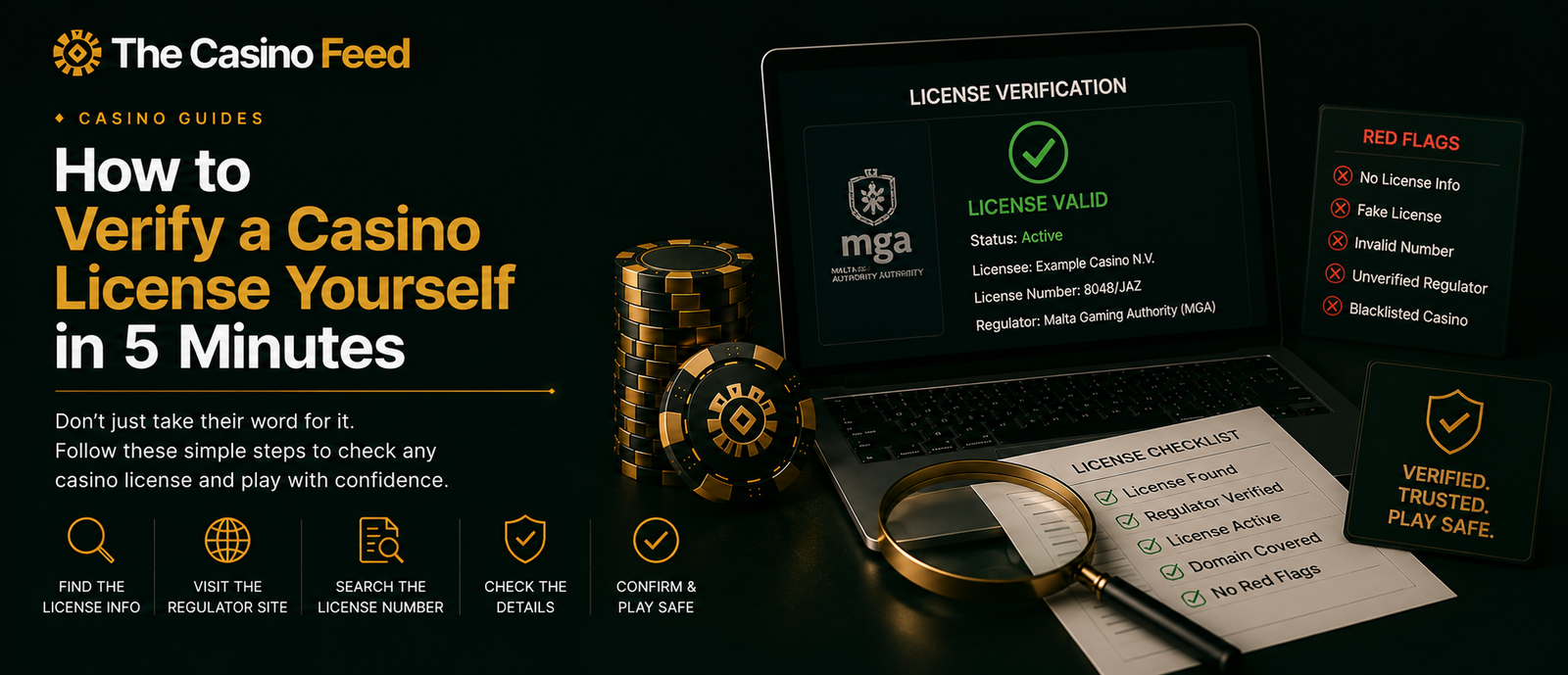
Not quite. That badge tells you almost nothing on its own. The good news is that actually confirming whether a license is real takes about five minutes, no special tools required, just a browser and a little patience. Let’s walk through exactly how to do it.
Why the Badge in the Footer Proves Nothing
Here’s the thing, a license logo is just an image file. Anyone can download a picture of the MGA seal or the UKGC logo and drop it into their website footer. It’s not cryptographically tied to anything. It doesn’t verify itself. It’s just pixels sitting on a page, and pixels don’t have opinions about whether they’re being used honestly.
Even when a badge was legitimately earned at some point, that doesn’t mean it’s still valid today. Licenses get suspended. They get revoked after enforcement action. Companies fold, sell the domain, and the new owner never bothers updating, or deliberately keeps, an old, expired badge because it still looks reassuring to new visitors. A casino that lost its license eight months ago can absolutely still have the shiny logo sitting in its footer, because nothing forces them to take it down the moment enforcement action gets taken.
Picture this: a player finds a casino with a legitimate-looking UKGC logo, clicks it, and it takes them to a generic “about our license” page hosted on the casino’s own domain, not the actual Gambling Commission site. That’s not verification. That’s the casino telling you about itself and hoping you don’t check further. Real verification only counts when it happens on the regulator’s own website, not anywhere the casino controls.
Step One: Find the License Number
Before you can check anything, you need the actual license number, not just the logo. The legitimate operators must ensure that they display it clearly, often at the bottom of the website, and sometimes in terms and conditions or about us pages.
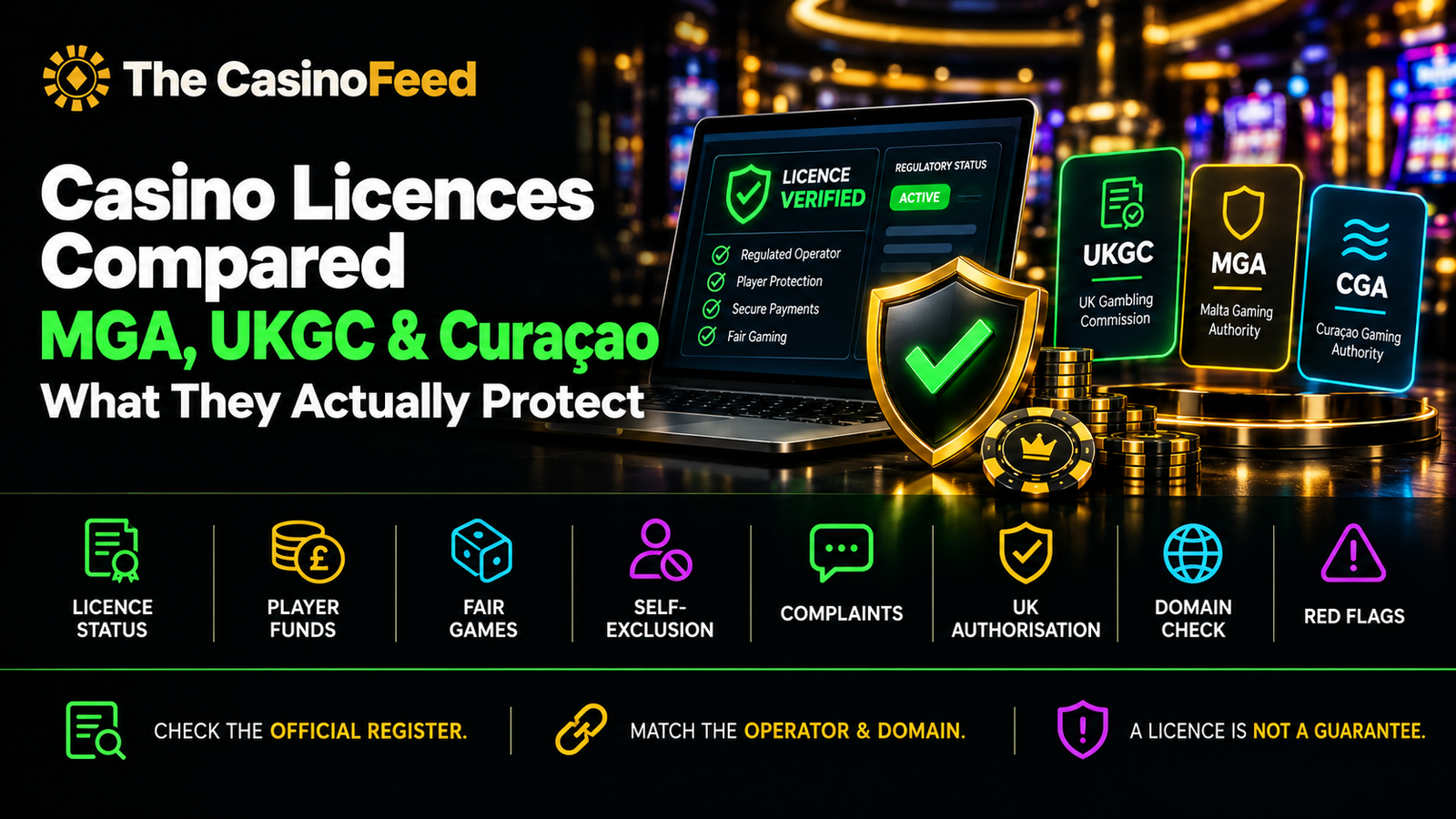
There are different formats used by each regulator and understanding how a legitimate license number should look would help you identify fake ones. The numbers issued by MGA follow the following format: MGA/B2C/XXX/YYYY where the middle part represents the company reference and the fourth part represents the year of issuance. Numbers issued by UKGC remote follow the format: XXXXX-R-XXXXXX-XXX. Curaçao licenses under the newer direct-licensing system are issued by the Curaçao Gaming Authority and come with their own registration reference tied to the operator’s actual registered entity, rather than the old sub-license numbering that referenced a master license holder.
If you can’t find a license number anywhere on the site, not in the footer, not in the terms, nowhere, that’s already a meaningful red flag before you’ve even started the actual check.
Step Two: Check It on the Regulator’s Own Register
This is the step people skip, and it’s the only step that actually matters. Don’t trust a “verify here” button on the casino’s own page. Go directly to the regulator’s website yourself, typed into your own browser.
For MGA, head to the Licensee Register through mga.org.mt, where you can search by licensee name, authorisation status, URL, or the specific gaming service the operator provides. Type in the casino’s company name or license number and see what comes back.
For the UK, go to gamblingcommission.gov.uk and use the Public Register section, which lets you search licensed businesses directly by name or license number. This register also shows any regulatory actions taken against a licensee, which is worth glancing at even when the license itself checks out fine.
For Curaçao, the process now runs through the Curaçao Gaming Authority directly, since the old system of checking a master license holder’s sub-license list no longer applies under the reformed framework. You’re checking whether the operating entity itself holds a direct license, not whether it’s attached to some larger umbrella company.
Type the details in yourself. Don’t click a link the casino gave you to “verify”, navigate there independently, the same way you’d never call a phone number given to you by someone claiming to be your bank.
Reading the Result: Active, Suspended, Not Found
Once you’ve searched, you’ll land on one of three outcomes, and each one tells you something different.
Active means the license is currently valid and the operator is authorized to provide services under it. This is what you want to see, and it’s worth also checking the listed activities match what the casino actually offers, a license limited to sports betting doesn’t cover a full casino product, for instance.
Suspended or revoked means exactly what it sounds like: enforcement action has been taken, and the operator is not currently authorized to legally accept players under that license, regardless of what their website still shows. If you see this status, do not deposit, and if you already have funds sitting in that account, prioritize withdrawing them immediately.
Not found is its own warning sign. If the license number or company name returns nothing on the regulator’s actual register, one of two things is happening, either the number is fabricated, or it belongs to a completely different company than the one you’re trying to verify. Either way, that’s not a license you can rely on.
The Cloned-License Trick and How to Catch It
This is the sneaky one, and it’s worth understanding because it catches even careful players off guard. Some fraudulent operators don’t invent a fake license number, they copy a real one, borrowed from an entirely different, legitimate casino, and slap it on their own site.
Here’s how you catch it: when you search that license number on the regulator’s register, look closely at the company name and domain listed against it. If the register shows the license belongs to “Golden Reef Entertainment Ltd” operating under “goldenreefcasino.com,” but you’re checking a site called “luckyspinpalace.net,” that’s a mismatch, even though the license number itself is technically real and active. The number belongs to someone else entirely.
This is exactly why it’s not enough to just confirm “is this number active.” You have to confirm the number is active for the specific operator and domain you’re actually looking at. A license number alone proves nothing if it’s been lifted from someone else’s legitimate business.
What to Do If It Checks Out but You Still Get Burned
Sometimes the license is completely genuine, currently active, correctly matched to the right company, and you still run into a payout dispute, a frozen account, or a wagering requirement fight. A valid license doesn’t make every single interaction with that casino automatically smooth; it just means there’s a real regulatory body standing behind the operator if things go seriously wrong.
If that happens, don’t just argue with support in circles. Escalate through the regulator’s own complaint channel, MGA and the UKGC both maintain formal player dispute processes specifically for this. We’ve covered how to actually work through that kind of situation, including how to tell a legitimate delay from a real stall, in our piece on what to do when a casino won’t pay you. A valid license gives that complaint real teeth, because the operator has something to lose by ignoring it.
The Faster Way: Let the Trust Score Do It
Honestly, if you’d rather skip the five minutes entirely, that’s what our Trust Score system already handles for every casino we review, license verification, cross-checked against the actual regulator registers, updated as statuses change, alongside things like verification friction and payout speed. It’s the same process outlined above, just already done for you before you ever land on a casino’s page.
The Bottom Line
A license badge is a claim, not proof. Proof only exists on the regulator’s own register, checked independently, with the company name and domain matched exactly against what you’re actually looking at. It takes five minutes, and it’s five minutes that can save you from depositing into a site with a suspended, fabricated, or borrowed license.
Next time you’re about to sign up somewhere new, do the check yourself first, or just pull up a casino’s Trust Score and skip straight to knowing where you stand.

3 Responses