
You’re amazed to see it at the bottom of a casino’s website, and you notice the small license number on it, followed by a flag and the words “18+ Gamble Responsibly. Malta. Or maybe Curaçao. Most gamers simply look at it, get a feeling of reassurance, and proceed with claiming their welcome bonus.
But the question no one asks when it’s too late: What does that license actually mean to you if the casino doesn’t pay out?
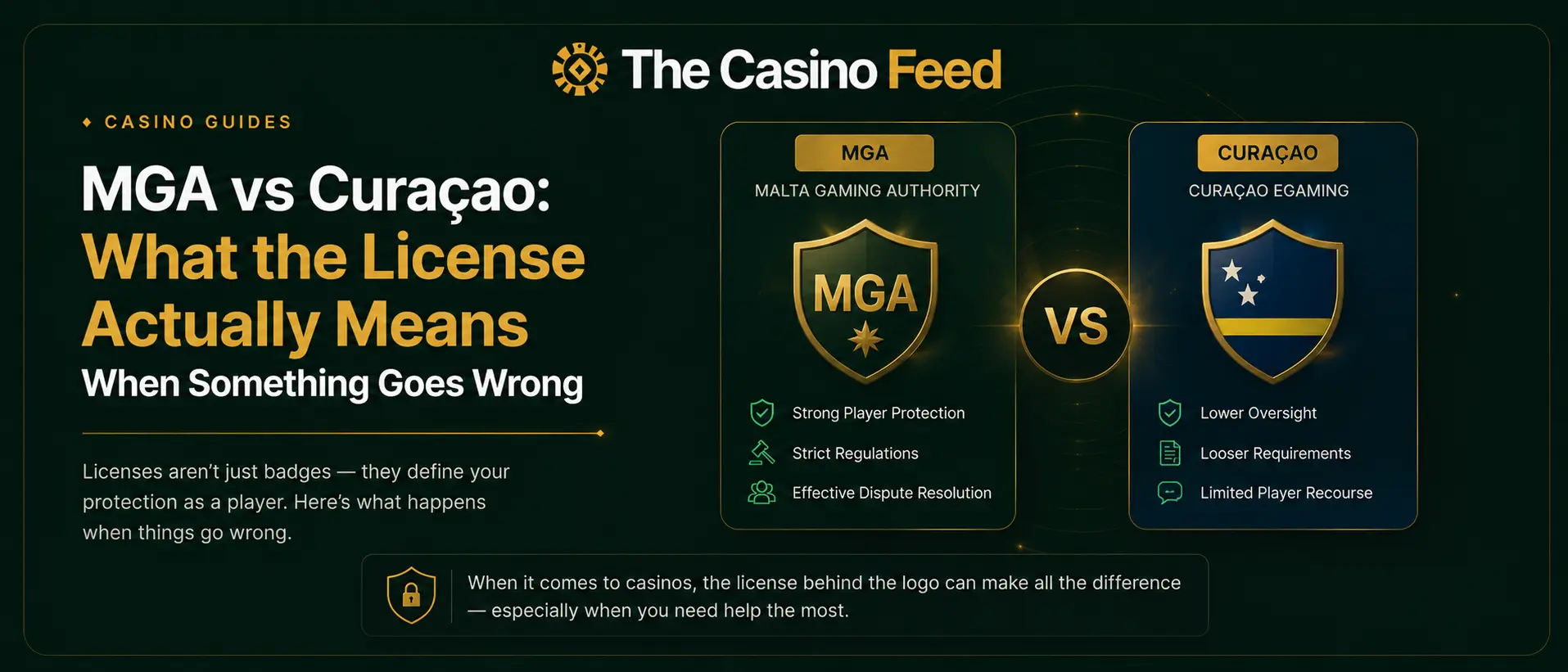
The reality is, MGA vs Curaçao are not one-size-fits-all approvals. They’re two completely different regulatory systems, with very different priorities, and when things go wrong, they respond differently. Let’s take them apart, really.
What the MGA License Is Built to Do
Over the years, the Malta Gaming Authority has been promoting itself as one of the toughest online gambling regulators. It’s not without its flaws, and it’s faced its share of controversy, but, as far as structure is concerned, it is designed with player protection in mind, not added on at the end.
The operator must maintain a separation of the players’ money from operating money under an MGA license. This is not a nice-to-have; this is a ‘license condition’. If a casino collapses, the money that you put in is supposed to be somewhere where it can be accounted for, and not mixed in with the money that is supposed to get to the marketing team.
MGA also has an official player complaint system in place. If you have a grievance against an MGA licensed operator, there is a real body to which you can appeal, and they have the power to investigate and challenge the operator. A comparison to how many players send angry e-mails into a void in other areas.
Imagine a casino that is licensed by the MGA and is in a sudden shortage of cash following a poor quarter. Player balances are therefore not lost for good, but can be recovered through the insolvency process (depending on the way the funds are held up) due to segregation requirements. It does not mean you’ll always be able to receive a 100% refund. There’s nothing in this business. But it’s a bona fide mechanism, not merely a badge on a web page.
What Curaçao’s License Has Traditionally Meant
Throughout its history, Curaçao functioned in a manner that was based on speed and accessibility rather than in-depth oversight. For decades, a few “master” license holders gave out sub-licenses to operators in many parts of the world, with little vetting and almost no enforcement of the licenses being sub-licensed. But it was cheap, it was quick, and it became the go-to option for smaller or newer operators that were unable to meet the bar standards for more stringent jurisdictions.
That accessibility was an actual price. The trouble was that the sub-licensed operators weren’t operating directly with the regulator, and were left with little recourse if things went wrong. When a casino ceased operations in Curaçao, players’ money was rarely subject to a dispute with real enforcement. You would complain and wait around for the best outcome.
This reputation, although true on many levels, is actually very outdated, as Curaçao got the whole system overhauled. The old master / sub-license system was phased out and, by November 2023, was completely abolished; by December 2024, the new legislation took the place of the old system.
The old regulator was the Curaçao Gaming Authority, and now licenses are directly granted to operators and not given by master license holders at their discretion. The new regime places real demands on operators with respect to financial stability, actual presence on the ground, and continuous fulfillment of compliance requirements, which were lacking in the past.
Why the Reform Matters (and Why It’s Not the Same as MGA Yet)
So does that mean Curaçao is now just as safe as Malta? Not exactly, and it’s worth being honest about that instead of pretending the reform solved everything overnight.
The new framework is a genuine improvement. Direct licensing means the regulator can no longer point at a master license holder and shrug off responsibility for a sub-licensed operator’s bad behavior. Financial solvency requirements mean operators theoretically have to prove they can cover player payouts before they’re ever granted a license. That’s a meaningfully higher bar than what existed even two years ago.
But the system is still young. A regulatory framework that’s been enforcing serious standards for one or two years hasn’t been tested by nearly as many real-world collapses and disputes as MGA, which has had over a decade to build precedent, refine its complaint process, and demonstrate, through actual cases, how it handles operator failures. Newer doesn’t mean broken. It just means there’s less of a track record to point to when you’re asking “okay, but what actually happens if this specific casino goes bust tomorrow?”
Think of it like comparing a bank with fifteen years of stress-tested history to one that just adopted much stricter internal controls last year. The new controls might be excellent. But you don’t yet have fifteen years of evidence showing exactly how they hold up under pressure.
A Real-World Comparison: Two Disputes, Two Outcomes
Let’s ground this in something concrete. Imagine two players, each owed a $2,000 withdrawal that suddenly stops processing.
Player A is with an MGA-licensed casino. When support goes quiet, they file a formal complaint through MGA’s player protection channel. There’s a documented process, a timeline for the operator to respond, and, because MGA requires segregated funds, a real basis for tracing whether the money exists and where. It might take weeks, it might be frustrating, but there’s an actual regulatory pathway doing something on the player’s behalf.
Player B is with a casino licensed under Curaçao’s new direct system. Under the CGA’s current process, players can file complaints, but here’s the catch, the regulator itself has been explicit that it can’t act as a court. It can investigate whether an operator broke the rules and take action against the license, but it can’t force the company to hand over a specific player’s money. So Player B may see the operator eventually punished or delicensed, which matters for future players, but that doesn’t necessarily put the $2,000 back in their pocket directly.
Neither outcome is guaranteed to end well, regulation isn’t magic. But the structural difference in what each body can actually do for an individual player during a live dispute is significant, and it’s exactly the kind of detail that gets lost in a footer logo.
How to Actually Use This Information
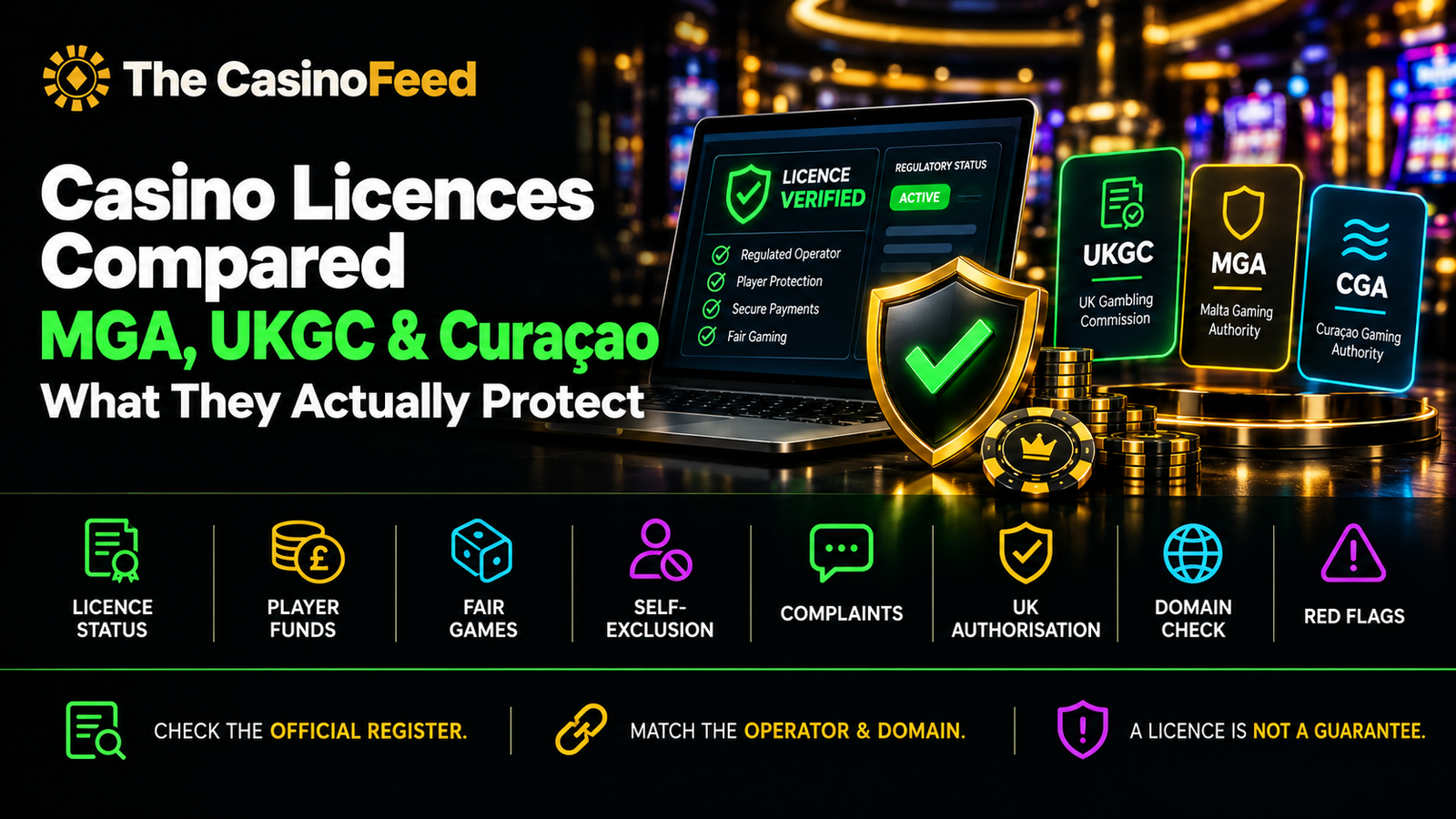
Don’t treat “MGA good, Curaçao bad” as a permanent rule, that’s outdated thinking at this point, and it ignores real reform. Instead, treat license type as one input, then dig a little further. Check whether the casino’s Curaçao license is current under the new LOK framework rather than a leftover from the old sub-license era, that distinction matters more than the word “Curaçao” itself. Check whether an MGA license is active and in good standing rather than assuming the badge in the footer is still valid. And regardless of jurisdiction, keep your exposure small: withdraw regularly, don’t let large balances sit around, and treat every operator, old regulatory reputation or new, as unproven until you’ve tested a withdrawal yourself.
The Bottom Line
MGA and Curaçao aren’t the same license wearing different flags. One has over a decade of enforced player protection behind it. The other is in the middle of a genuine, meaningful upgrade that hasn’t yet had time to prove itself the way MGA has. Neither fact should be the only thing you check, but both are worth knowing before you deposit a cent.
Next time you’re about to sign up somewhere new, take thirty seconds to actually look up the license status instead of trusting the footer. It’s the cheapest insurance policy you’ll ever buy.

3 Responses