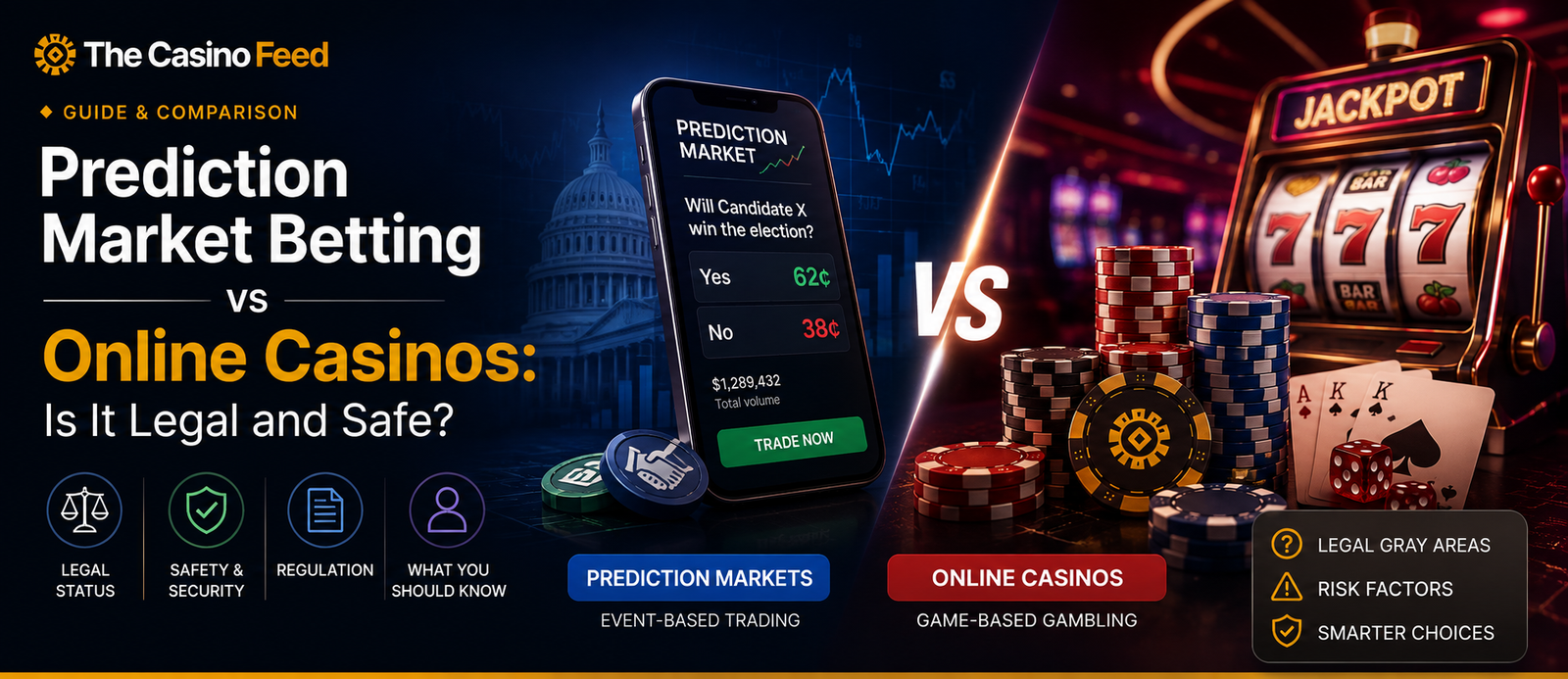
While clearly not classified as gambling, prediction markets such as Kalshi and Polymarket are in a totally different legal space than online casinos. However, the term “differently regulated” does not imply “settled” and the legal battle to determine whether sports-related prediction markets are just sports betting in disguise is still far from over well into late 2026.
What a Prediction Market Actually Is
Prediction markets are a way to make bets on events or results from the real world, such as an election, economic indicator, sports event, etc., where the market price reflects the probability assigned to each outcome. You don’t have to bet against the bookmaker’s house. You’re making a “Yes” or “No” bet on an exchange, just like you would with a stock, but you’re betting on the result of some event instead of a company’s stock.
It is this structural difference that is why platforms such as Kalshi and Polymarket are regulated by the Commodity Futures Trading Commission (CFTC) as swaps and event contracts, rather than the way state gaming commissions regulate online casinos and sportsbooks.
The Legal Status Right Now: Federally Legal, State-by-State Contested
That’s when it gets really tricky, and where most explainers get it wrong. Kalshi and the Polymarket US app are both regulated by the CFTC and are legally permitted in all 50 states and Washington D.C. in that context. But in reality, many states contest this in the context of sports-related contracts in particular, claiming that they are, in practice, identical to sports betting, and therefore should not be exempt from state gambling licenses.
CFTC has filed legal claims against nine states, all of which have argued that they do not accept that the CFTC has exclusive federal jurisdiction over these contracts, as of mid-2026. In turn, states have taken a stance of firm opposition, including bringing criminal charges against Kalshi before a federal court which halted the state’s efforts, though appeals are still pending.
Minnesota tried a first-of-its-kind outright ban on prediction markets, and then a federal judge raised an eyebrow over whether sports event contracts are really all that different from regular sports betting. Minnesota’s prohibition on prediction markets was a first-of-its-kind move, though a judge in the case asked whether sports event contracts are really that different from regular sports betting. Kentucky’s Attorney General sued Kalshi, Polymarket, and several other platforms directly, prompting the CFTC to countersue the state days later.
The practical result: in most states, prediction markets currently continue operating while these cases work through the courts, but the legal ground is shifting state by state, sometimes month by month. A market “available” in a given state today isn’t guaranteed to stay that way, and the reverse is also true, states currently restricted may see that change depending on how ongoing litigation resolves.
How This Differs From an Online Casino
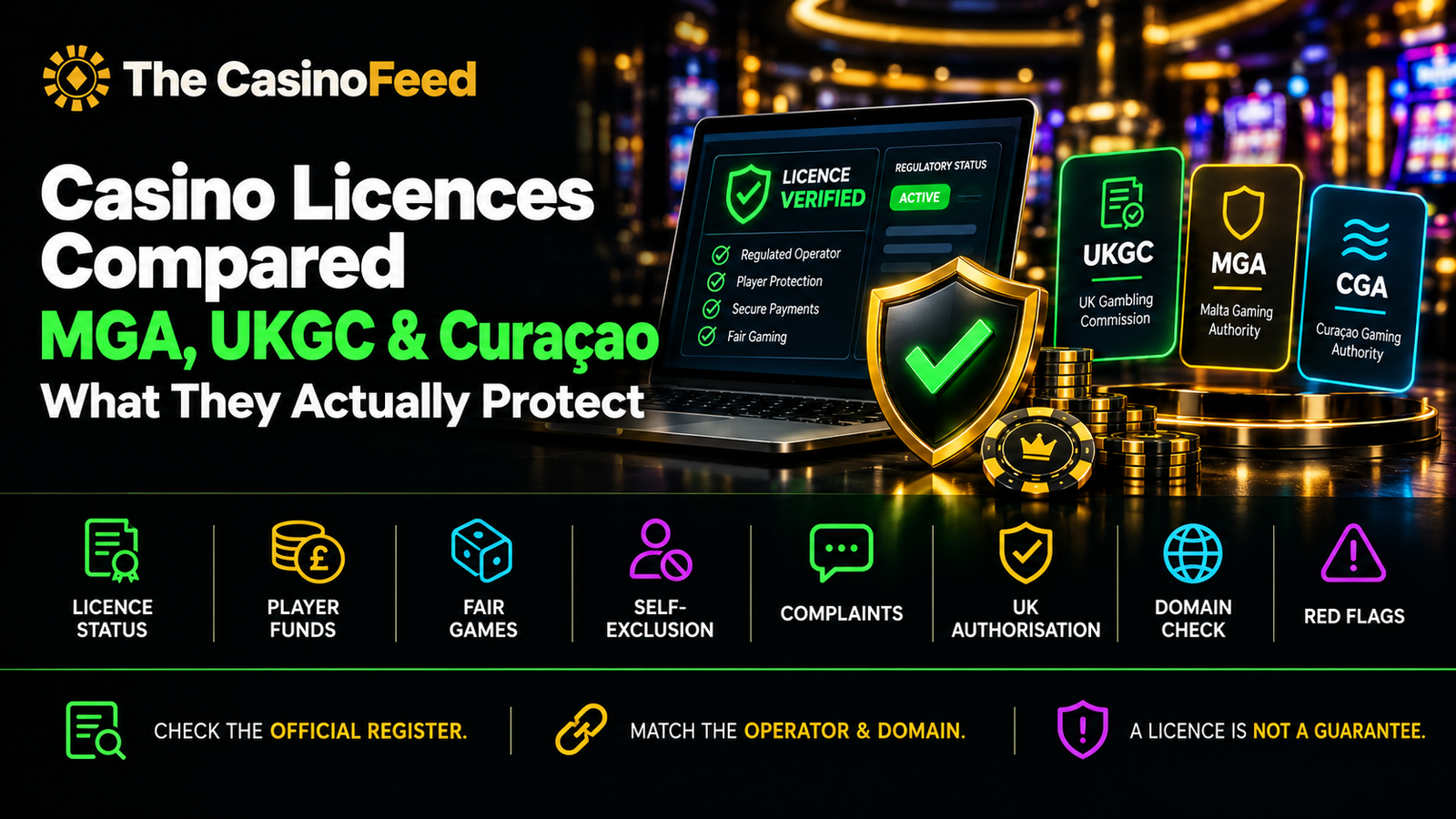
An online casino operates under a state or international gambling licence, subject to the specific consumer protections, complaint processes, and disclosure requirements that licence carries, UKGC, MGA, individual US state gaming commissions, and so on. That regulatory framework is mature, well-established, and comes with a defined path for disputes: internal complaints, Alternative Dispute Resolution providers, and a licensing regulator with clear authority to act.
Prediction markets, by contrast, sit under federal commodities regulation, a framework genuinely built for financial derivatives trading, not consumer gambling protection. That has real consequences. There’s no equivalent to the responsible-gambling requirements of a gambling licence; no standard tool for self-exclusion like GAMSTOP; no gambling-specific ADR system, but the dispute resolution process is part of the CFTC’s general controversy/commodities enforcement processes. Both are not inherently “unsafe,” but they are designed to help protect users against different kinds of risks that have meaning.
Is It Actually Safe to Trade On?
Safety here breaks into two separate questions: platform safety and market integrity.
On platform safety, CFTC-regulated exchanges like Kalshi carry real regulatory oversight, and being a Designated Contract Market means meeting specific federal requirements around operations and capital. That’s a genuine layer of protection most unregulated offshore betting sites don’t have.
On market integrity, the picture is murkier. Regulators have flagged concerns about potential insider trading and unusual trading patterns around specific events, prompting the CFTC to open investigations and consider enhanced surveillance requirements. A Stanford University study also identified statistical patterns in certain crypto-linked event contracts on Polymarket consistent with irregular trading activity. These are active, unresolved concerns, not settled conclusions, but they’re worth knowing about before assuming a CFTC-regulated market is automatically as clean as a traditional financial exchange.
Tax Treatment Adds Another Layer of Uncertainty
Beyond legality and platform safety, how prediction market winnings get taxed remains genuinely unresolved as of 2026. Depending on classification, either as Section 1256 contracts (a blended capital gains rate) or as gambling income (taxed at ordinary rates with a stricter loss deduction cap), the tax outcome for the same trade could differ significantly, and the IRS hasn’t definitively settled which applies. This uncertainty is worth factoring in as a real practical risk, separate from the legal questions around the platforms themselves.
The Bottom Line
Prediction markets aren’t simply “online casinos with a different name,” and they aren’t simply “always legal everywhere” either. They occupy a genuinely unsettled middle ground: federally regulated, contested at the state level, with real open questions around market integrity and tax treatment that traditional online casinos, for all their own issues, generally don’t carry in the same form. If you’re weighing one against the other, understand you’re choosing between two different regulatory worlds, not just two different products with the same protections behind them.
If you’re sticking with traditional online casino gambling instead, choosing operators with genuine, verifiable licensing and clear consumer protections matters more than ever given how much regulatory noise exists elsewhere in the broader betting space right now. That’s exactly the kind of detail The Casino Feed checks and rates in every review.
FAQ
Are prediction markets like Kalshi legal in the US?
Yes, at the federal level, both platforms are subject to regulation by the CFTC, and are technically legal everywhere in the United States. The contracts are, however, the subject of a legal battle in several states as of 2026, and the real availability of these contracts depends on the state, and may change.
Is trading on a prediction market the same as gambling?
Legally, no, they’re structured and regulated as commodities trading rather than gambling. Functionally, particularly for sports-related contracts, many state regulators argue they closely resemble sports betting, which is exactly the core dispute currently playing out in court.
Are prediction markets safer than online casinos?
They carry different protections, not necessarily better or worse ones. CFTC oversight provides real regulatory backing, but prediction markets lack the mature consumer protection framework, responsible gambling tools, and gambling-specific dispute resolution that licensed online casinos are required to offer.
Do I have to pay taxes on prediction market winnings?
Yes, but exactly how those winnings are taxed remains unsettled, with reasonable arguments for different tax treatments producing significantly different outcomes. It’s worth consulting a tax professional given the current uncertainty rather than assuming a single clear-cut answer.