
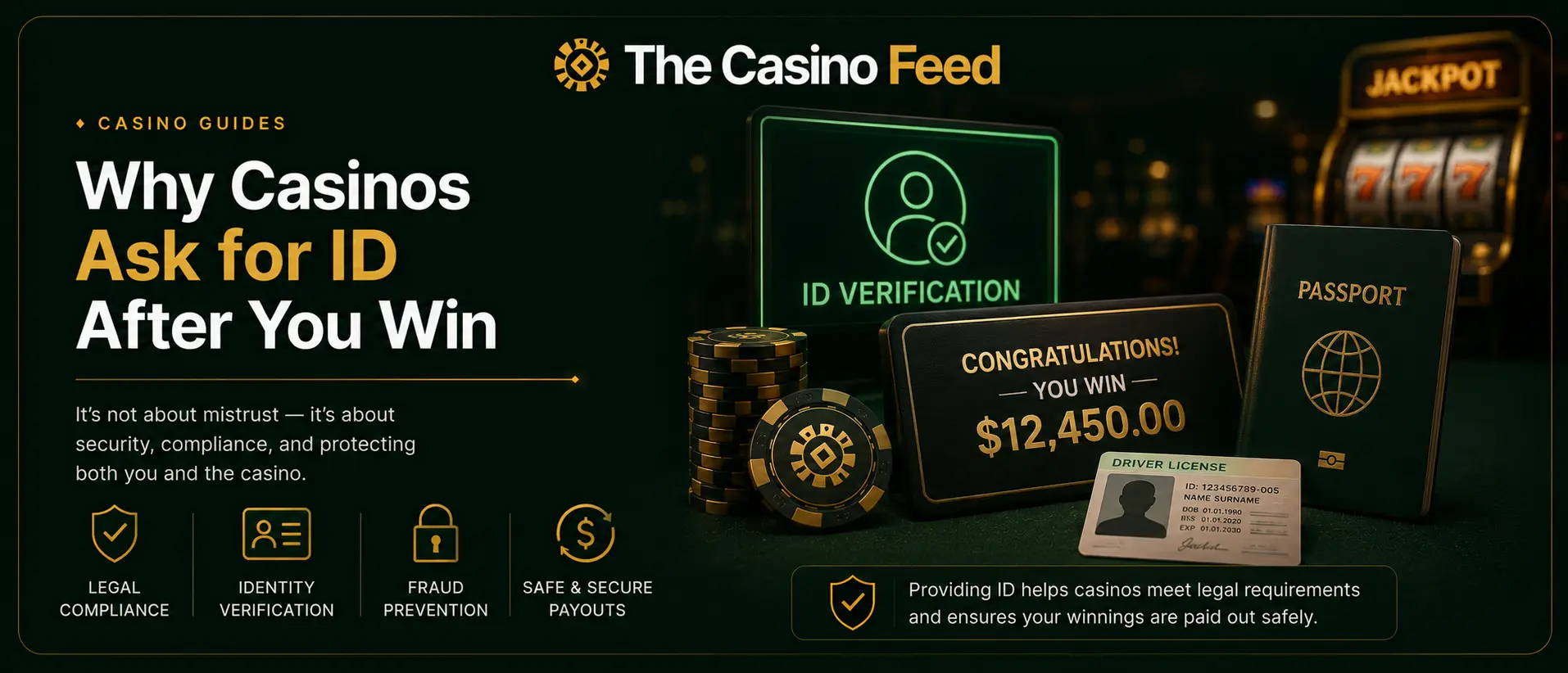
Put in fifty dollars, play a few slots and no one flinches. Three hours later and you’ve got a good one and want to cash out and the casino demands your passport, a utility bill and a selfie with your driver’s license in hand like you are applying for a mortgage. Feels backwards, right? Them, why didn’t they ask you your name before they took your money?
It feels suspicious. They appear to be procrastinating, or perhaps even trying to find justification for not paying. The problem is, there’s actually a system here and once you understand it, the why now and not earlier becomes more clear.
Let’s dive into the reasons why verification usually arrives at the withdrawal stage, and not the deposit stage, and why it’s important to you as a player.
The Regulatory Logic Behind Delayed Verification
Online casinos are subject to anti-money laundering regulations and it is important to note that the regulations are not only for money coming in, but money going out. From a regulatory perspective, putting money into a casino account is a comparatively low-risk time. It’s your own money! No one is yet harvesting any value.
The money comes into play, however, when someone calls it quits: that’s what regulators are worried about. It’s when a casino should verify the identity of the individual to whom the funds are being deposited and confirm that the funds are not being laundered through gameplay. Rather than before a deposit, operators are under specific obligations to undertake the identity verification process before a payout with the UK Gambling Commission’s licensing conditions or the AML requirements of Malta.
Think about it from the regulator’s chair for a second. If someone deposits stolen funds into a casino, plays a few hands, and then withdraws “clean” winnings, that’s a textbook money laundering pattern. Verifying identity at withdrawal lets the casino, and by extension, the regulator, actually catch that kind of activity before the money exits the system looking legitimate. Checking ID at deposit wouldn’t do much to stop this, because the risky part of the transaction hasn’t happened yet.
So no, it’s not that casinos suddenly get suspicious once you win. They’re required to build their compliance checks around the moment that actually carries risk.
Why Checking ID at Deposit Wouldn’t Actually Solve Anything
Here’s a question worth asking: if verification is so important, why not just do it upfront and get it over with? Wouldn’t that be simpler for everyone?
The truth is, front-loading verification creates a worse experience without meaningfully improving safety. Casinos know that asking for a full KYC (know your customer) document bundle before someone’s even decided if they like the platform kills signups. Picture a new player who just wants to try a few free spins with a small deposit, if that player’s greeted with a request for a passport scan and a proof-of-address document before they’ve spent a dollar, most of them just leave. That’s not hypothetical; it’s well-documented in the industry as a major conversion killer.
There’s also a practical fraud-prevention argument on the operator’s side. Requiring documents at deposit doesn’t stop someone from depositing with stolen card details in the first place, and verification doesn’t undo a fraudulent transaction; it just confirms identity. What actually matters is confirming identity before money leaves the casino, because that’s the step where the operator is on the hook if things go wrong. A casino that pays out to the wrong person, or to someone using a stolen identity, can face regulatory penalties and chargebacks. Verifying before a deposit doesn’t protect them from that risk. Verifying before a withdrawal is done.
What most people miss is that this isn’t the casino protecting itself from you specifically. It’s the system protecting itself from the much smaller number of bad actors who’d exploit a no-verification setup, and unfortunately, everyone has to go through the same checkpoint to catch that minority.
What Verification at Withdrawal Actually Involves
What are they really looking for? Typically, it’s a standard KYC package of a government-issued photo ID, proof of address (such as a recent utility bill or bank statement), and possibly a selfie or short video to verify the individual’s identity with the documents. In some cases, the operators will also check the payment method itself, ensuring that the card or e-wallet that is used to fund the account is the same one that the player owns.
Let’s go through an actual situation. Suppose you make a deposit with a debit card, play for several weeks, and then win $3,000 on a slot machine. Suppose you make a deposit with a debit card, play for a few weeks, and eventually win $3,000 on a slot machine. The casino will require your ID, a recent bank statement with the same card, and a picture of you before releasing the withdrawal. Annoying? Sure. This is exactly what enables the casino to verify three things at once: you’re a real person, you’re old enough to play the games, and you’re not funneling the money to someone who is not the account holder.
That is why larger wins will be subjected to more scrutiny than smaller wins. A $50 withdrawal may breeze through with a simple verification. A $10,000 jackpot is more likely to raise source-of-funds questions: where did the funds originally come from? Because the regulators seek to identify large transactions as being higher risk. It’s not personal. It’s just proportional.
Why This Timing Actually Protects You Too
It’s easy to only see this from the “why is this casino making me jump through hoops” angle. But verification at withdrawal cuts both ways, and it’s worth flipping the perspective for a second.
If a casino didn’t verify identity at all, what’s stopping someone from accessing your account and draining your winnings to a different payment method? Verification at the payout stage is partly what prevents that. It confirms the person cashing out is actually the person who earned the win, not someone who got hold of a password.
There’s also a personal angle here worth admitting, I’ve seen players get genuinely relieved once they understand this isn’t a stall tactic. A friend of mine hit a decent win on an online slot a while back and immediately assumed the ID request was the casino trying to wriggle out of paying. It wasn’t. It took about two days, the documents were standard, and the payout went through. The delay felt suspicious in the moment, but it was just process, not evasion.
That said, and this matters, legitimate verification requests should be reasonably fast and clearly explained. If a casino is asking for the same documents repeatedly, stalling for weeks with no explanation, or requesting things that have nothing to do with standard KYC, that’s a different story entirely. There’s a real difference between “we’re completing required compliance checks” and “we’re using compliance as an excuse not to pay.” Knowing the difference protects you from writing off legitimate delays as scams, and also from missing genuine red flags.
How to Make the Verification Process Painless
You can speed this whole thing up dramatically by handling verification early instead of waiting for a big win to force the issue. Most reputable casinos let you submit KYC documents right after signing up, well before you ever hit a withdrawal request. Do that. Upload a clear photo ID and a recent proof of address the same week you register, and by the time you actually win something, the process is already done.
Also worth doing, check that the name on your casino account matches the name on your payment method exactly. Mismatches are one of the most common reasons withdrawals get delayed, and it’s a completely avoidable headache.
The Bottom Line
Casinos aren’t asking for your ID after a win to make life difficult. They’re following a regulatory structure that focuses verification on the moment money actually leaves the system, because that’s the moment that matters for catching fraud and laundering. It’s not personal, and it’s not usually a stalling tactic, though it’s fair to keep an eye out for operators who genuinely misuse the process.
If you’re planning to play anywhere new, do yourself a favor and get verified early. It’ll turn a potentially stressful withdrawal moment into a formality instead of a fire drill.





6 Responses