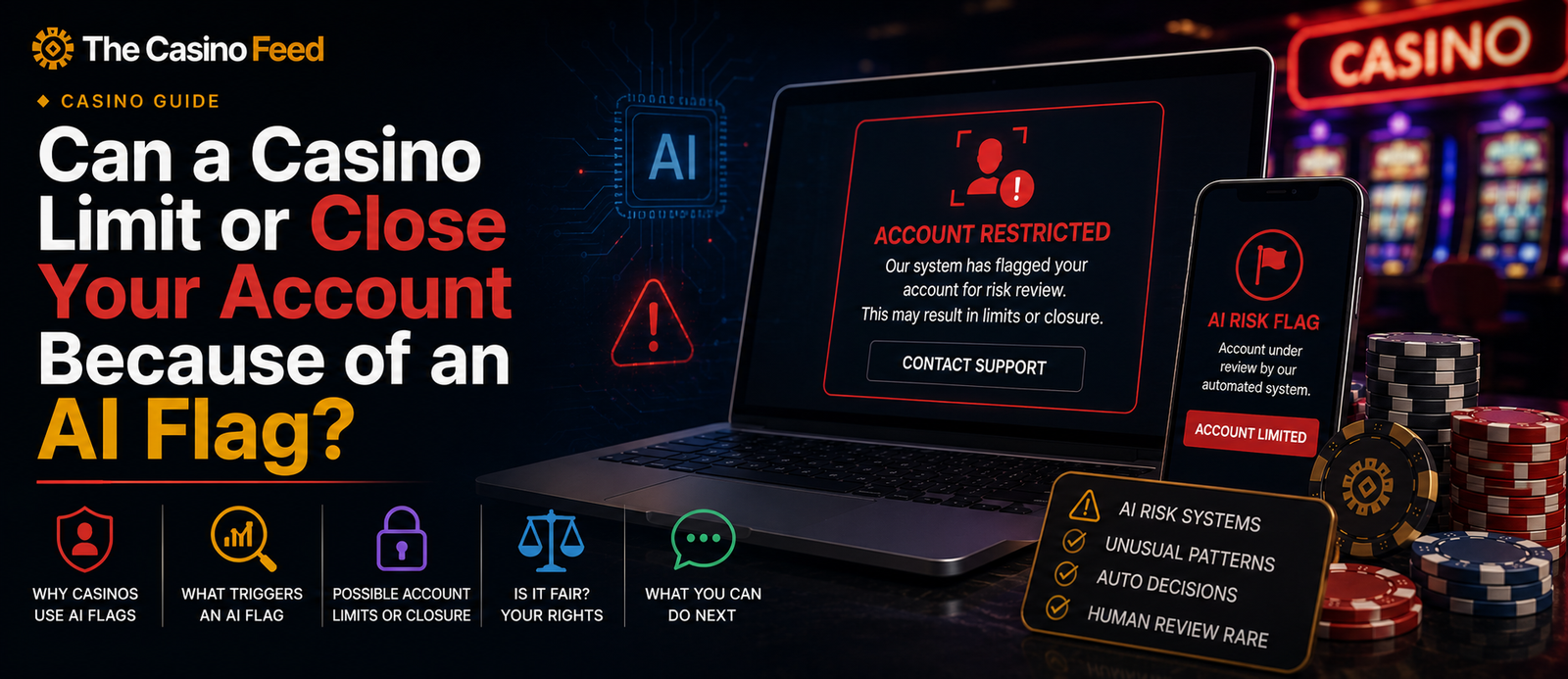
Yes. Nowadays, it is a common practice for big casinos to implement AI behavioral surveillance systems to detect any abnormalities in the player’s account and impose restrictions such as deposits limits, cooling-off period, restrictions, or even closure without giving any particular reasons for that. It is not an error or mistake most of the time. It’s increasingly what regulators actually require.
Why Casinos Are Doing This Now
This shift isn’t purely a casino’s own initiative, it’s increasingly a regulatory mandate. In June 2025, the AGCO, the gaming regulator in Ontario, provided clear guidance that it was no longer acceptable to rely only on the use of self-exclusion in order to stop problem gambling. Casino operators should be able to track their players in real-time and take actions before there is an application for self-exclusion.
There’s also a scale problem behind this. A large operator can have well over a million active accounts at any given time, and no team of human analysts can realistically watch that volume manually. AI lets a platform process millions of behavioral signals daily without proportionally growing its risk and compliance staff, which is exactly why this has become standard across the industry rather than a niche feature at a handful of operators.
What Actually Gets Flagged
AI monitoring systems will generally monitor a set of behaviors rather than just one. These usually include: a notable rise in the amounts of deposits after a sequence of unsuccessful plays, which is perceived as loss chasing. Rising session frequency or unusually long session lengths compared to a player’s own baseline. Notable shifts to late-night or unusual-hour play patterns. Sudden changes in betting size or frequency that deviate sharply from established behavior. And, on the fraud and compliance side entirely separate from responsible gambling, unusual payment activity, mismatched account details, or patterns resembling money laundering typologies.
It’s worth understanding that these two categories, responsible gambling risk and fraud or AML risk, are usually monitored by different systems with very different consequences attached, even though both can result in an account being flagged or restricted.
What Happens When You’re Flagged
The reaction will scale according to how severe and what kind of signal is detected. At the softer end of the scale, there is a range of systems that automatically provide the gambler with a reality check, pop-up screen with information about the duration and expenses of their session, or suggestions to take breaks and set deposit limits which can be accepted or declined by the gambler.
The fraud or AML alerts will go down the completely different route, usually ending up with a request for documents/source of funds, suspension of the account until the investigation, or even permanent closure and forfeiture of the account where the terms have been violated.
Is This Actually Fair? The Honest Answer
Here’s where things get genuinely mixed, and it’s worth being honest about it rather than pretending every operator does this well. Implementation quality varies enormously across the industry. Some platforms genuinely intervene early and appropriately, catching real risk before it escalates. Others, according to independent testing across a range of operators, have produced weak or inconsistent detection despite marketing materials describing sophisticated AI protection, meaning outcomes for the same underlying behavior can differ significantly depending on which specific operator you’re playing at.
There’s also a documented and separate concern flagged by the UK Gambling Commission around bad actors using AI, including deepfakes and synthetic documents, to bypass identity checks entirely, which pushes legitimate operators toward even more aggressive automated screening in response, sometimes catching genuine players in the net meant for fraud rings.
The practical upshot: false positives happen. Just because you are flagged does not mean that you have done something wrong or that the restriction is forever.
What to Do If You Think You Were Wrongly Flagged
In case your account is restricted or banned due to being flagged wrongly, send an email to support asking for clarification on why your account was flagged and how you can fix the problem. Reputable operators generally have a human review process behind automated flags, and pushing for that human review, rather than accepting an algorithm’s decision as final, is a reasonable and often effective step.
If support can’t or won’t clarify the reason, or the restriction persists well beyond what seems reasonable, the same escalation path applies here as with other account disputes: a formal written complaint, then an Alternative Dispute Resolution provider or the relevant licensing regulator if that doesn’t resolve it. For the fuller breakdown of reasons accounts get locked and how to work through each one, see Casino Locked or Closed My Account: What It Means and Your Options, and for the full escalation process, see What to Do If an Online Casino Refuses to Pay You.
If the flag was actually a legitimate responsible-gambling intervention rather than an error, it’s worth sitting with that possibility honestly rather than only looking for a way to have it reversed. These systems exist because loss-chasing and escalating play patterns are genuinely difficult to see clearly from the inside of a session, and a system built to catch that isn’t automatically wrong just because it’s inconvenient in the moment. If gambling has started to feel harder to control than you’d like, the National Gambling Helpline is free, confidential, and available 24/7.
AI-driven monitoring is becoming standard across the industry, and how well an operator actually implements it, fairly, transparently, with real human review behind serious actions, varies more than most marketing admits. That’s exactly the kind of detail The Casino Feed checks and rates in every review.
FAQ
Can a casino really close my account just from an algorithm’s decision?
Often an algorithm generates the initial flag, but most reputable operators route serious actions like account closure through a human review process rather than an algorithm alone, though the quality and consistency of that human review varies significantly between operators.
What behavior most commonly triggers an AI risk flag?
Increased deposits following losing sessions, unusually long or frequent play sessions, late-night pattern shifts, and sudden changes in typical betting behavior are among the most common signals monitored by responsible gambling AI systems.
Is being flagged the same as being accused of fraud?
No. Responsible gambling flags and fraud or AML flags are generally separate systems with different purposes, one focused on player wellbeing, the other on financial crime prevention, though both can result in account restrictions.
Can I get a restriction reversed if I think it was a mistake?
Sometimes, yes. Contact support in writing, ask for the specific reason, and request a human review if one hasn’t already happened. If that doesn’t resolve it, formal complaint and Alternative Dispute Resolution escalation routes are available at licensed operators.